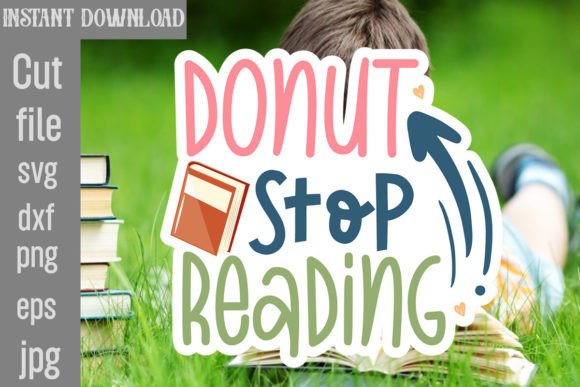
Donut Stop Reading SVG: A Designer’s Review
As a designer who spends half my life digitizing and the other half stitching, I have learned that not every cute graphic translates well to thread. We see thousands of files marketed toward crafters, but few stand up to the scrutiny of actual production. Today, I am taking a close look at the Donut Stop Reading SVG Cut File. This isn’t just about whether the image is adorable—though it certainly is—but about how it functions when you move from a digital screen to a physical, stitched reality.
The first impression of this design is playful and inviting. It taps into that popular "bookish" aesthetic that has taken over social media, combining a love for literature with a sweet treat motif. Visually, the layout is balanced. The typography is bold enough to be legible, and the donut graphic provides a nice visual anchor. For those of us in the Crafts and Graphics space, we know that balance is key. If the text is too thin, it gets lost in the fabric texture. If the graphic is too complex, it becomes a bird’s nest of thread breaks. This design seems to hit a sweet spot, offering a clean silhouette that suggests it will stitch out cleanly without excessive trimming or frustration.
Real-World Application: The Custom Tote Test
To truly evaluate a file, you have to imagine it on a product. Let’s walk through a real-life scenario. Imagine a customer orders a custom tote bag for their local book club. They want something fun, recognizable, and durable. This is where the Donut Stop Reading SVG Cut File shines as a potential candidate. Because the design relies on strong shapes rather than intricate shading, it works exceptionally well for applique or simple fill stitches on canvas or cotton twill.
If I were producing this for a small shop product, I would likely use the SVG file to cut heat-transfer vinyl for a mixed-media look, or I would use the vector data to create a satin-stitch border around an applique donut. The transparency of the concept allows for versatility. On a natural-colored tote, using warm browns and pinks for the donut creates a cozy, autumnal vibe. On a bright white canvas, you could go for a more vibrant, pop-art aesthetic. The design’s simplicity means it doesn’t overpower the bag; it enhances it. For an Etsy seller, this kind of versatility is gold. It allows you to offer multiple colorways without redesigning the entire asset.
Performance on Apparel and Textiles
Moving beyond totes, let’s consider custom apparel. Sweatshirt embroidery is a huge market right now. However, fleece and french terry have a pile that can swallow small details. When evaluating this file for a sweatshirt, I look at the lettering. "Donut Stop Reading" is a phrase with varying character widths. In a real embroidery project, you must ensure the font weight is sufficient. If the letters are too thin, they will sink into the fleece. Based on the visual proportions of this design, it appears robust enough for medium-weight fabrics, provided you use the right stabilizer.
For baby embroidery or onesies, the context changes. Parents love literary themes, but the garment is small and the fabric is delicate. Here, the scale of the Donut Stop Reading SVG Cut File becomes critical. You would need to resize it significantly. When shrinking vector graphics, you risk losing definition. I recommend testing the resized version on scrap fabric first. Check if the curves of the donut remain smooth or if they become jagged. For baby items, I would suggest simplifying the stitch types, perhaps opting for a running stitch outline rather than a dense fill, to keep the garment soft against sensitive skin.
What about caps? Embroidering on curved surfaces like baseball hats is tricky. The design needs to be narrow enough to fit within the standard cap hoop area without distorting. This design’s horizontal layout might require careful placement. You may need to adjust the height-to-width ratio to ensure it doesn’t wrap too far around the curve, which can cause registration issues during stitching. Always check your hoop size constraints before committing to a production run.
Technical Considerations for Designers
Let’s talk about the files themselves. The package includes SVG, DXF, EPS, and PNG formats. For embroidery machine users, the SVG and EPS files are your best friends. They allow you to import the shape into your digitizing software (like Wilcom, Hatch, or Brother PE-Design) to create the actual stitch file. The PNG is useful for mockups and web previews, helping you visualize the finished product before you even thread the needle.
However, a crucial note for beginners: these are cut files and vectors, not pre-digitized embroidery files (like PES or DST). You still need to digitize them or assign stitch types in your software. This is actually a benefit for experienced designers because it gives you full control over stitch density, underlay, and thread colors. You can decide whether the donut glaze uses a satin stitch for shine or a fill stitch for texture. You can adjust the pull compensation to ensure the letters don’t gap open after washing.
When working with dark fabrics, contrast is king. If you are stitching this on a navy hoodie, ensure your thread colors pop. A light pink donut on navy looks great, but if the text is also light, make sure it’s bold enough to be read from a distance. Test your design in black and white mockups first. If the design loses its shape in grayscale, it might lack the necessary contrast for clear visibility.
Commercial Viability and Branding
For commercial embroidery professionals and small business owners, consistency is vital. This design fits well into a broader collection of lifestyle graphics. It appeals to teachers, librarians, students, and casual readers. By adding this to your lineup of design assets, you broaden your appeal beyond just food lovers or just book lovers. It bridges two niches.
Customer trust is built on quality. A clean stitch-out signals professionalism. Because this design avoids overly complex gradients or tiny, fragile details, it is less likely to result in thread breaks or messy backs. This means less time spent on cleanup and higher customer satisfaction. When you sell a personalized gift or a boutique item, the back of the embroidery matters almost as much as the front. A well-balanced design like this one makes it easier to achieve a neat finish.
Final Verdict and Practical Tips
The Donut Stop Reading SVG Cut File is a solid addition to any crafter’s library. It is versatile, trendy, and technically manageable. However, success depends on your execution. Here are my top tips for using this file effectively:
- Test on Scrap Fabric: Always run a test stitch on the same material you plan to use for the final product. Fabric tension and texture vary wildly.
- Check Stabilizer: Use a cut-away stabilizer for stretchy fabrics like t-shirts and sweatshirts to prevent distortion after washing.
- Review Stitch Density: If you digitize this yourself, avoid making the fill too dense. Too many stitches can pucker lightweight fabrics.
- Confirm Licensing: Before selling finished items, double-check the license terms included in your download. Most commercial licenses allow for physical sales but restrict reselling the digital file itself.
- Mockup First: Use the included PNG to create realistic previews for your online store. Good photography and mockups drive sales as much as the design itself.
In conclusion, this design offers a charming blend of humor and style that resonates with current trends. Whether you are creating holiday gifts, stocking your Etsy shop, or making a special present for a friend, the Donut Stop Reading SVG Cut File provides a reliable foundation for a high-quality embroidered piece. Just remember that the file is only half the battle; your choice of thread, fabric, and technique will determine the final masterpiece.