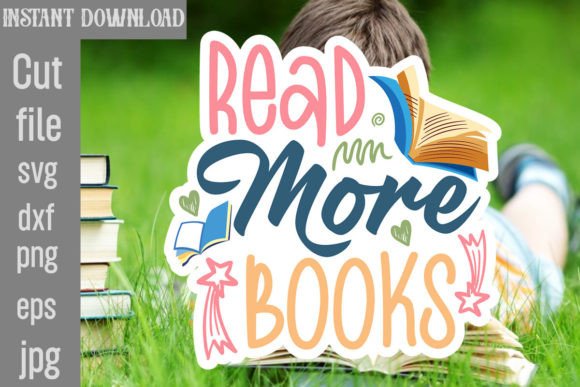
Review: Read More Books SVG for Embroidery
As a designer who spends more time staring at stitch simulations than I care to admit, I have learned that not every digital file translates well to thread. We live in an era where Crafts and Graphics intersect constantly, but the gap between a crisp vector line on a screen and a textured, stitched reality is where projects succeed or fail. Recently, I evaluated the Read More Books SVG Cut File to determine if it holds up under the needle. This is not just a cut file; for many of us, it is the foundation of a potential bestseller or a cherished personalized gift.
First Impressions and Visual Personality
When I first unzipped the package, my immediate focus was on the clarity of the lines. The Read More Books SVG Cut File carries a whimsical yet grounded aesthetic. It appeals directly to the literary crowd, a niche that is surprisingly robust in the handmade market. The design does not rely on excessive complexity, which is often a trap for beginners. Instead, it uses clean shapes and recognizable iconography—stacked books and clear typography—to convey its message.
The mood is cozy and intellectual. It feels at home in a library, a coffee shop, or a quiet reading nook. For an embroidery designer, this thematic clarity is crucial. You do not want to spend ten minutes explaining what your design represents. With this file, the message is instant. The layout is balanced, avoiding the common pitfall of having text that is too small or graphics that are too dense for standard home machines.
Real-World Application: The Tote Bag Test
To truly test a design, you must imagine it on a product. I visualized the Read More Books SVG Cut File on a heavy canvas tote bag. This is a classic use case for book lovers. Canvas has a distinct weave, which can swallow fine details if the stitch density is not managed correctly. Because this design relies on bold outlines and solid shapes, it performs exceptionally well here. The text remains legible even from a distance, which is vital for apparel and accessories.
I also considered its application on a sweatshirt. Fleece and cotton blends present different challenges than woven canvas. The softness of the fabric requires a design that does not feel stiff or board-like. If this SVG were converted into a dense fill stitch without proper underlay, it could pucker the fabric. However, the open nature of the book illustrations suggests that a combination of satin stitch for borders and light fill or running stitch for internal details would keep the garment flexible and comfortable. This versatility makes it a strong candidate for custom apparel lines.
Navigating Fabric and Hoop Constraints
While the design is robust, it is not immune to the physical limitations of embroidery. I would advise caution when using this on stretchy fabrics like jersey knits unless you are experienced with stabilizers. The horizontal lines of the stacked books could distort if the fabric shifts during stitching. A cut-away stabilizer is non-negotiable here to maintain the integrity of the embroidery project.
Hoop size is another critical factor. If you are working with a 4x4 hoop, you may need to scale the design down significantly. At smaller sizes, the lettering in "Read More Books" could become illegible. Thread thickness matters immensely here. Using a standard 40-weight rayon or polyester thread is safe, but if you switch to finer threads for detailed work, ensure your machine tension is calibrated. On dark fabrics, the contrast becomes your best friend. A bright white or cream thread against navy or black cotton creates a striking visual pop, enhancing the readability of the text.
Commercial Viability for Etsy Sellers
For the Etsy seller or small shop owner, this file offers significant commercial potential. Bookish merchandise is evergreen. It sells year-round, with spikes during back-to-school seasons and holidays. The Read More Books SVG Cut File allows for rapid product creation. You can create embroidered patches, aprons for teachers, or nursery decor for young readers. The key to success lies in presentation. Since this is a digital download containing SVG, DXF, EPS, and PNG files, you have the flexibility to create high-quality printable mockups.
Using the included PNG with a transparent background, you can overlay the design on various product photos to show customers exactly how it will look. This builds trust and reduces hesitation. Furthermore, the vector formats (SVG and EPS) allow you to resize the design without losing quality, ensuring that your design assets remain sharp whether you are making a tiny baby onesie or a large pillow cover. This adaptability is essential for maintaining brand consistency across a diverse product line.
Technical Considerations and Stitching Advice
Before committing to a final finished product, always run a test stitch on scrap fabric. This is the golden rule of professional embroidery. Check how the corners of the books render. Sharp corners can sometimes bunch up if the stitch angle is not optimized. If you are digitizing this SVG yourself for machine use, pay attention to the stitch density. Too dense, and you risk perforating the fabric; too sparse, and the backing shows through.
Thread color selection should complement the mood. Earth tones, deep greens, and muted blues work well for a vintage library feel, while bright primaries suit a children’s book theme. Remember that the digital embroidery file is just the starting point. Your choice of thread, fabric texture, and stabilizer will define the final outcome. Inspect the small details closely. If the spacing between the letters is too tight, consider adjusting the tracking slightly to prevent thread bridging.
Final Verdict for Makers
The Read More Books SVG Cut File is a practical, versatile addition to any designer’s library. It bridges the gap between simple cut projects and textured embroidery beautifully. It respects the limitations of home machines while offering enough visual interest to stand out in a crowded marketplace. Whether you are creating a personalized gift for a teacher or stocking your craft business with new inventory, this design holds up under scrutiny. Just remember to respect the fabric, choose your stabilizer wisely, and always test before you sell. In the world of handmade goods, precision is the difference between a hobby and a profession.