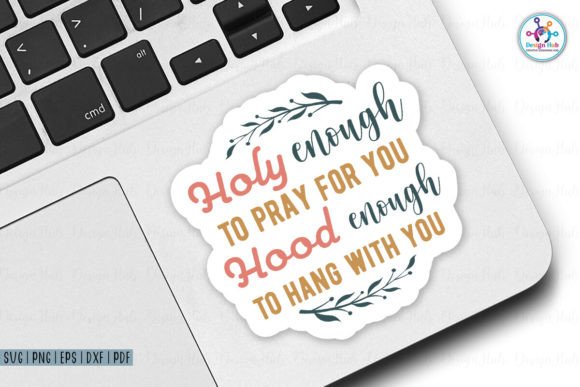
Reviewing Holy Enough to Pray for You Hood Enough
As a designer who has spent countless hours digitizing and stitching out files for clients, I have learned that the gap between a digital preview and a finished embroidery project is where the real work happens. When I first pulled up the Holy Enough to Pray for You Hood Enough design on my screen, I was immediately struck by its cultural relevance and typographic personality. It is not just a phrase; it is a statement piece that bridges two distinct worlds. For those of us in the Crafts industry, finding Graphics that resonate with modern sensibilities while remaining technically viable for stitching is a constant challenge. This review breaks down how this specific design holds up when moved from the computer screen to the embroidery hoop.
First Impressions and Visual Mood
The immediate appeal of Holy Enough to Pray for You Hood Enough lies in its juxtaposition. It combines spiritual reverence with streetwise confidence, creating a mood that is both approachable and bold. From a layout perspective, the design relies heavily on typography. In the world of machine embroidery, text-heavy designs are notoriously tricky. They require precise balancing of stitch density to ensure legibility without turning the fabric into a stiff cardboard patch. The visual personality here suggests a design meant to be seen and read clearly, likely utilizing a mix of satin stitch for outlines or smaller elements and fill stitch for larger letter bodies to maintain coverage and texture.
When evaluating such a piece, I look for flow. Does the eye move naturally across the phrase? In this case, the rhythm of the words suggests a balanced composition that would sit comfortably on the chest of a garment or the center of a tote. It feels contemporary, making it an excellent candidate for sellers looking to update their inventory with fresh, conversation-starting items.
Real-World Application: The Sweatshirt Test
To truly understand the viability of any machine embroidery design, you must imagine it on a specific product. I visualized this design stitched onto a heavyweight, charcoal-grey crewneck sweatshirt. This is a popular item for custom apparel shops and Etsy sellers alike. The contrast between white or light grey thread and the dark fabric would make the text pop, ensuring high readability. However, this choice of fabric brings up critical technical considerations. Sweatshirt material is thick and often fuzzy. If the embroidery file does not account for proper underlay stitching, the text could sink into the fleece, losing its crisp edges.
In this scenario, using a cut-away stabilizer is non-negotiable. The weight of the text requires support that will last through multiple washes. I also considered how the design would look as a personalized gift. Imagine adding a small name or date beneath the main phrase. If the original file allows for easy editing of these elements, it becomes a versatile asset for a craft business. If it is a static image, the seller must be careful not to clutter the design with additional customizations that might compromise the structural integrity of the stitch-out.
Navigating Fabric and Hoop Constraints
While the design shines on sturdy materials like denim, canvas, or heavy cotton, it requires caution on lighter fabrics. Placing this on a thin t-shirt or a silky blouse could lead to puckering, especially if the thread colors are dense. The hoop size is another pivotal factor. Before purchasing or downloading, you must confirm the dimensions. If this is a large statement piece, it may require a 5x7 or even a 6x10 hoop. Attempting to shrink it down to fit a 4x4 hoop for a baby hat or a small pocket could render the text illegible. Tiny lettering turns into a blob of thread when scaled down too far, losing the nuance of the font.
For those interested in creating an embroidered patch, this design offers a great opportunity. Patches allow for heavier stabilization and denser stitching without worrying about the drape of the garment. A patch version of Holy Enough to Pray for You Hood Enough could be ironed onto jackets, bags, or hats, offering a flexible solution for customers who want the look without committing to permanent embroidery on their clothing. However, always check if the file includes a satin border or if you need to add one manually to prevent fraying edges on the patch.
Commercial Viability and Brand Consistency
For small shop product creators, consistency is key. This design fits well within a brand identity that values authenticity, faith, and modern culture. It appeals to a demographic that enjoys holiday embroidery gifts but also wants everyday wear that reflects their personality. When used in commercial embroidery projects, such as bulk orders for church groups or community organizations, the design’s clarity ensures that the message is received instantly. It builds customer trust because it looks professional and intentional, not like a generic clip-art addition.
Moreover, the versatility of the file formats mentioned—SVG, PNG, EPS, PDF, and DXF—suggests that this asset is not limited to embroidery alone. While our focus is on stitching, having access to vector files like SVG and EPS allows for printable mockup creation. You can show customers how the design looks on a mug, poster, or phone case before they buy the embroidered version. This cross-platform utility increases the perceived value of the design assets and helps in marketing the finished product across various channels.
Practical Designer Notes for Best Results
Before you commit to stitching this on a customer’s expensive garment, follow these practical steps. First, always test the design on scrap fabric that matches the weight and texture of your final material. Check the stitch density; if it feels too stiff, consider reducing the density in your editing software if the file type allows. Second, pay attention to thread color contrast. High contrast is essential for readability, but ensure the colors align with your brand palette. Third, inspect the small details. Are there any tiny connecting stitches that might break easily? Reinforce them if necessary.
Additionally, verify the licensing terms. Just because a file is available in multiple formats does not automatically grant commercial rights. Ensure you are cleared to use Holy Enough to Pray for You Hood Enough for Etsy listings and physical sales. Finally, consider the fabric texture. On textured towels or waffle knits, a running stitch outline might get lost. In such cases, a thicker satin column or a slight increase in stitch width can help the design stand out.
Final Verdict on Design Utility
The Holy Enough to Pray for You Hood Enough design is a strong contender for modern handmade product lines. It balances trendiness with timeless sentiment, making it suitable for a wide range of applications from tote bag design to sweatshirt embroidery. Its success, however, depends entirely on the executor’s attention to technical detail. By respecting the limitations of hoop size, choosing the right stabilizer, and testing on appropriate fabrics, you can transform this digital file into a high-quality physical item that resonates with buyers. For the discerning designer, it offers a rewarding challenge and a profitable opportunity in the crowded market of digital embroidery file usage.