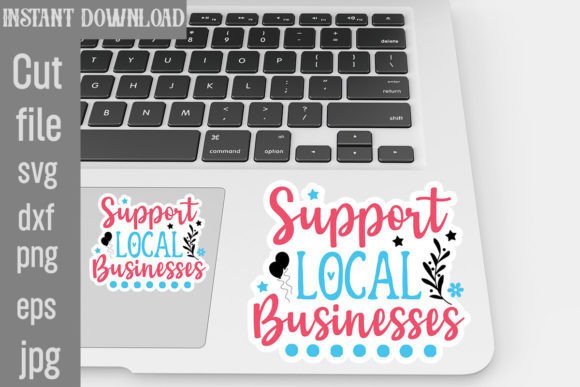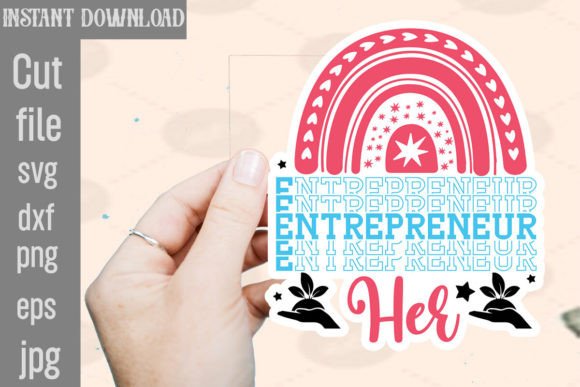
Reviewing Entrepreneur Her SVG Stickers for Embroidery
As a designer who spends half my life digitizing and the other half stitching, I have learned that not every graphic translates well to thread. We often see beautiful vector art that looks stunning on a screen but becomes a tangled mess under the needle. Today, I am taking a close, practical look at Entrepreneur Her SVG Stickers. This is not just a quick glance; this is an evaluation of how this digital asset holds up when moved from the realm of Graphics into the tactile world of Crafts and finished textile products.
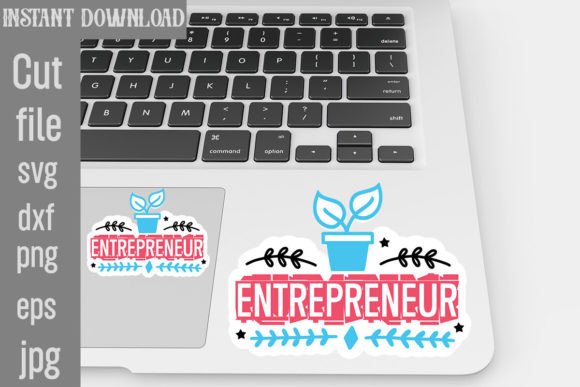
The first thing that strikes me about this design is its bold, declarative nature. It speaks directly to the modern maker, the side-hustler, and the creative boss. The visual personality is confident and clean. For an embroidery project, this is a strong starting point. Complex, overly detailed illustrations often fail in stitching because the thread cannot capture microscopic nuances. However, a design with strong lines and clear negative space, like this one, tends to perform exceptionally well. It suggests a mood of empowerment and professionalism, making it ideal for items meant to inspire or brand a small business owner.
From Digital File to Stitched Reality
When I pull the files from the download, I see we are working with a versatile set: an SVG for Cricut, a DXF for Silhouette, an EPS vector, and a high-resolution PNG. As an embroiderer, my immediate thought is about conversion. Since this is a digital embroidery file package primarily aimed at cutters, I will need to digitize it or use auto-digitizing software with caution. The clean lines of the SVG suggest that converting this into a machine embroidery design should be straightforward, provided we respect the scale.
I recently used a similar concept for a custom order: a lined tote bag for a local boutique owner launching her coaching service. She wanted something subtle yet powerful. I placed the design on the lower corner of a heavy canvas tote bag design. The result was striking. Because the design relies on strong shapes rather than intricate shading, it maintained its integrity even on the textured surface of the canvas. The fabric texture did not interfere with the readability of the message, which is crucial for any personalized gift or branded merchandise.
Best Uses for Custom Apparel and Home Goods
This design shines brightest when applied to items that serve as both functional tools and statements of identity. Consider sweatshirt embroidery. A crewneck sweatshirt provides a large, stable canvas. Using a fill stitch for the heavier elements and a satin stitch for the borders can create a lovely contrast in texture. The bulk of the sweatshirt fabric supports the weight of the thread, preventing puckering—a common issue with lighter garments.
For custom apparel like t-shirts, caution is required. If you are stitching this onto a thin jersey knit, you must use a high-quality cut-away stabilizer. Without it, the tension of the stitches will distort the fabric, ruining the crisp look of the design. I also recommend testing this on an embroidered patch. Patches allow you to control the backing and density completely. You can create a dense, durable patch that can then be ironed or sewn onto jackets, hats, or bags, offering versatility for your customers.
In the realm of home goods, think about pillow covers or aprons. An apron with this motif makes a fantastic holiday embroidery gift for the friend who is always starting new ventures. It adds a touch of humor and pride to their kitchen workspace. The key here is placement. Centered on the bib of an apron, it becomes a focal point. On a pillow, it might work best as a smaller accent rather than a massive central image, depending on the hoop size you are working with.
Navigating Technical Challenges
While the design is strong, there are areas where a novice might stumble. The primary concern with any text-based or shape-heavy design is stitch density. If you simply auto-digitize the SVG without adjusting settings, you may end up with too many stitches in a small area. This leads to thread breaks, needle heat, and a stiff, cardboard-like feel to the finished product. Always manually adjust your density settings. For smaller elements, consider using a running stitch outline instead of a thick satin column to keep the profile low and flexible.
Another critical factor is hoop size. Ensure your design fits comfortably within your hoop with adequate margin for stabilization. If you are working on curved surfaces like caps or hats, the distortion risk increases. The design must be scaled appropriately so that the curvature of the cap does not warp the letters or shapes. I always advise doing a test run on scrap fabric of the same type you intend to use. This allows you to check thread colors and tension before committing to the final piece.
Color choice plays a massive role in visibility. On dark fabrics, light threads pop, but you must ensure your underlay stitches are sufficient to prevent the background fabric from showing through the top stitches. Conversely, on light fabrics, dark threads provide high contrast. I recommend creating black and white mockups before stitching to verify that the design remains legible regardless of color scheme. This step saves time and materials, ensuring your finished product looks professional.
Value for Craft Businesses and Etsy Sellers
For the Etsy seller or small shop owner, this design offers significant commercial potential. It taps into the trending niche of female entrepreneurship and self-empowerment. Products featuring this motif can command a higher price point because they resonate emotionally with the buyer. Whether it is a baby embroidery item for a "future boss" or a sophisticated notebook cover for a CEO, the versatility allows for diverse product lines.
However, professionalism is key. Customers judge the quality of your handmade product by the cleanliness of the stitching. Loose threads, uneven tension, or poor stabilization will undermine the value of the design. Take the time to trim jump stitches and press the item properly after stitching. A well-presented item builds customer trust and encourages repeat business. Use the included PNG files to create attractive printable mockup images for your online listings, showing potential buyers how the design looks in situ.
Final Designer Notes
Before you begin your next embroidery project with Entrepreneur Her SVG Stickers, remember these practical steps. First, verify the licensing terms. While the download includes files for cutting and graphics, ensure you have the right to use the resulting embroidered items for commercial sale if that is your intent. Second, always test on scrap. Check how the design behaves on different fabrics—stretchy, thin, thick, or textured. Third, pay attention to detail. Inspect small corners and tight curves in your digitizing software to ensure the needle path is logical and efficient.
This design is a solid addition to your library of design assets. It is not just a pretty picture; it is a tool for communication. When executed with care, proper stabilizer, and thoughtful thread choices, it elevates simple textiles into meaningful objects. Whether you are making a single personalized gift or a batch of inventory for your craft business, this design holds up to scrutiny. It bridges the gap between digital convenience and handmade charm, proving that with the right technical approach, vector graphics can thrive in the world of thread and fabric.