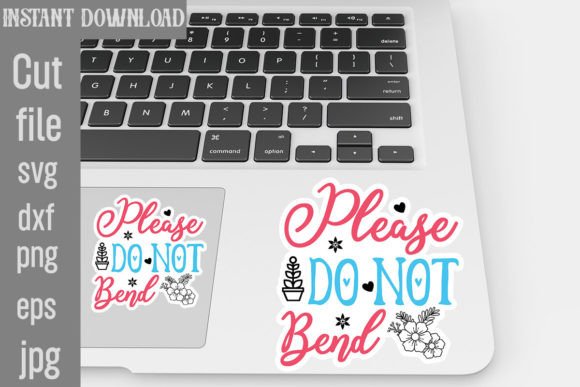
Reviewing Please Do Not Bend SVG Stickers for Embroidery
As a designer who spends half my life digitizing patterns and the other half stitching them out, I have learned to look at digital files with a critical eye. We often see designs marketed broadly across Crafts and Graphics, but not every vector translates beautifully to thread. Recently, I evaluated Please Do Not Bend SVG Stickers to determine its viability for real-world embroidery projects. This is not just a graphic asset; it is a statement piece that requires careful handling to ensure the final stitched product meets professional standards.
First Impressions and Visual Personality
The phrase "Please Do Not Bend" carries an immediate nostalgic weight. It evokes the rigid cardboard mailers of comic books and vinyl records, suggesting care, value, and fragility. Visually, the design relies on bold, authoritative typography. When I first opened the files included in the download—specifically the SVG for Cricut and the EPS vector—I noticed the clean lines and sharp angles. For an embroidery designer, this is both a blessing and a challenge. Clean lines mean easier digitizing potential, but sharp corners can be tricky to fill without bulk.
The mood is playful yet serious. It works exceptionally well for items that are meant to be handled with care or for ironic, humorous gifts. The visual personality is assertive. It does not whisper; it shouts. This makes it ideal for products where you want the message to be the focal point, such as the center chest of a sweatshirt or the front panel of a tote bag. However, because it is text-heavy, the legibility of the font choice is paramount. If the original graphic uses a thin or overly decorative typeface, it may not survive the transition to thread without significant modification.
Real-World Application: The Custom Tote Bag Scenario
To test the practicality of Please Do Not Bend SVG Stickers, I imagined a specific client project: a custom embroidered tote bag for a local bookstore. The client wanted packaging that emphasized the care taken in handling rare editions. Using the PNG file with its transparent background at 300 DPI, I created a printable mockup to visualize the placement. The design sat perfectly on the canvas fabric, offering a stark, high-contrast look.
In this scenario, the design functions as more than just decoration; it becomes part of the brand narrative. For an Etsy seller or small shop product owner, this kind of thematic consistency builds customer trust. When a buyer receives a tote with this embroidery, they understand that the contents are precious. The design elevates the handmade product from a simple accessory to a curated experience. It fits naturally into the realm of commercial embroidery where branding and message delivery are just as important as aesthetic appeal.
Technical Considerations for Stitching
While the graphic files (SVG, DXF, EPS) are excellent for cutting machines like Cricut or Silhouette, using them for embroidery requires a crucial intermediate step: digitizing. You cannot simply import an SVG into an embroidery machine and expect magic. You must convert the vector paths into stitch types. Here is how I approach this specific design:
- Stitch Type Selection: For the bold letters, a satin stitch is usually the best choice if the column width allows. It provides a smooth, shiny finish that looks professional. If the letters are too wide for a single satin column, a fill stitch with a slight texture might be necessary, though this increases stitch count and production time.
- Corner Management: The sharp edges of the block lettering need careful underlay stitching to prevent puckering. Without proper stabilization, the fabric may pull away from the corners, distorting the message.
- Stitch Density: Because this is a text-based design, density is critical. Too dense, and the fabric becomes stiff and board-like. Too sparse, and the backing fabric shows through, ruining the crispness of the message. I recommend testing on scrap fabric first to find the sweet spot.
It is also vital to consider the hoop size. This design likely requires a medium to large hoop to accommodate the full phrase without cramping the edges. If you are working on a smaller item, like a baby onesie, you may need to scale the design down significantly. Be cautious here: shrinking text too much can cause the stitches to merge, making the words unreadable. Always check the smallest details after scaling.
Fabric and Thread Choices
The success of Please Do Not Bend SVG Stickers depends heavily on the substrate. For a sweatshirt embroidery project, a thick, fluffy fleece can swallow small details. In this case, I would recommend using a contrasting thread color to ensure visibility. A white thread on a heather gray sweatshirt might get lost, whereas a bright yellow or black would pop.
For tote bag design applications using canvas or denim, the fabric texture is coarser. You may need a heavier weight thread or a higher stitch density to cover the weave of the fabric. Conversely, if you are attempting this on a thin cotton tea towel for holiday embroidery or kitchen decor, you must use a cut-away stabilizer to support the stitches. Without it, the tension of the embroidery will pucker the lightweight fabric, making the item look amateurish.
When selecting thread colors, think about the context. The phrase suggests caution, so traditional warning colors like black, yellow, or red work well. However, for a softer baby embroidery item, pastels can soften the imperative tone, turning it into a gentle reminder rather than a strict command. Always test your color combinations in black and white mockups first to ensure there is enough contrast for readability.
Commercial Viability and Brand Consistency
For craft business owners, this design offers versatility. It can be used for personalized gifts, such as a laptop sleeve or a tablet case, where the instruction is literal. It also works for ironic apparel, appealing to a younger demographic that appreciates retro aesthetics. As an embroidered patch, it could be a bestseller if applied to denim jackets or backpacks.
However, professionalism is key. Before selling finished items, ensure you have the correct commercial license for the design assets. The product description indicates a digital download with SVG, DXF, EPS, and PNG files, but it does not explicitly state the embroidery licensing terms. Always confirm whether the creator allows the sale of physical goods made with their designs. Protecting your small shop product line from copyright issues is as important as the quality of your stitching.
Final Verdict and Designer Notes
Please Do Not Bend SVG Stickers is a strong candidate for various embroidery projects, provided you respect the technical limitations of thread. It is not a plug-and-play solution for embroidery machines; it requires thoughtful digitizing. My advice to fellow designers and makers is to treat the vector files as a blueprint, not the final product.
- Digitize with care, paying attention to corner turns and stitch direction.
- Test on similar fabrics to your final product to gauge density and stability.
- Use appropriate stabilizers, especially for stretchy or thin materials.
- Verify licensing for commercial use before listing items on Etsy or in boutiques.
When executed correctly, this design adds significant value to the finished product. It communicates care and personality, enhancing buyer engagement and brand recognition. Whether you are creating custom apparel or unique home decor, this design can be a standout element in your portfolio. Just remember: the difference between a good design and a great embroidered piece lies in the details of execution.